What Do You Do When Workplace Stress Gets Beyond A Joke?

It is unfortunately all too common for someone to arrive at work already feeling stressed…

Then feel the strain of having to jump into work without a chance to get over the usual morning madness, let alone then deal with work stress they can feel throughout the day.

After rushing to get the kids fed and out the door, breakfasting on coffee instead of something decent, dealing with insane work traffic, they arrive to a job and workplace that could include one or more of these factors that seem to heighten stress levels:


  • Low salaries
  • Uncertainty about job security
  • Lack of control over job-related decisions
  • No real opportunities for growth or advancement
  • Lack of control over how you do your work
  • Unreasonable workloads
  • Conflicting demands or lack of clear leadership
  • Lack of challenge from your job
  • More overtime due to staff cutbacks
  • Lack of resources and support to be able to perform well

Stress has become such a part of everyday life in our society that “everyone knows” what stress feels like, “everyone” has almost definitely experienced it at some time in their life.

At home

In conversations with a “difficult” person

At school

At work

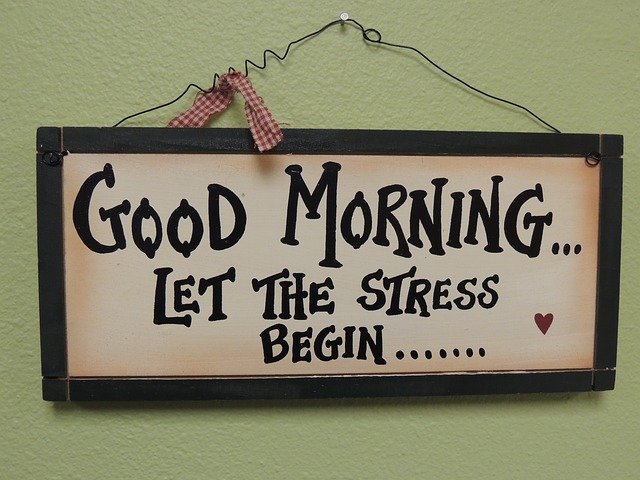
(Ever woke up, feeling this way?)

Because it is so prevalent these days, it is important to understand the signs and how to combat it so that your health and wellbeing, as well as the wellbeing of those close to you is not negatively affected.

Now, maybe it isn’t you that is so stressed, but a colleague who is feeling the pressure.

It could be that their unhappiness or negativity from stress is beginning to impact your work performance or your general willingness to work where you are.

What would you say to someone who felt this bad?

You’ve seen some of these signs:

  • They have become critical or slightly cynical at work.
  • Their productivity is lower than it used to be, they aren’t as motivated.
  • They have expressed disappointment about their job or the company.
  • They talk about having trouble getting started at their job.
  • They are having difficulty with the work/life balance.
  • Getting to work is a drag.

Their attitude is far from the best these days and while it may not be obviously affecting co-workers yet, it will eventually have an impact on the workplace environment, let alone their own personal wellbeing.

You don’t really like to see anyone losing in life, right?

If it is someone close to you, they may have also mentioned problems in the way of

  • financial difficulties
  • relationship upsets
  • dissatisfaction with the way their life is.

Who hasn’t run into one or more of these at some point in their life?  Add to the mix, work stresses, and things can really affect health and happiness, can’t they?

As their friend you want to help. You may have already tried, only to have hit a brick wall.

What do you tell them that really will make a difference?

How can they do something about it?


Now, just as importantly, if after reading the above, any of this has hit home as being the way you feel or something you do, then you need to look at what is best for your health and wellbeing.

You need to take charge of any stress in your workplace as well as your life and you need to make it your priority.

As much as you may be able to think of several reasons not to.

Workplace stress doesn’t usually fully disappear when someone walks through their front door after a long day of it.

Sadly, it can impact their home life too.

It can also contribute to problems such as headaches, sleep disturbances, concentration difficulties and a myriad of health conditions.


Workplace Stress Management


Workplace stress is on the rise in New Zealand.*

General workload and increasing change at work have been found to be significant factors.  If you were to do a search of work stress internationally, you would find no shortage of reports and articles on this situation worldwide.

With the apparently increasing pace of change in the workplace, and in life in general, you couldn’t go wrong to make yourself savvy to the signs of workplace stress and what to do about it.

As daily disruptions and changes occur, demand on you can increase.

In the case of new systems or routines put into place, any confusion brought about can stress even the sanest employee.

In moments like these it pays off to be able to recognise when to exercise more patience, to understand how to keep communication smooth amongst everyone and what to do to rise above any exhaustion brought on by changes, people in general and the need to do something new.

Helpful Advice For Workplace Stress.

7 Simple Ways You Can Deal With Stress At Work


  • Get enough sleep

Really, do. Have the right amount of sleep for you, borderline every night isn’t going to cut it.  If you have young kids that wake, do the best you can do to get enough sleep on the nights you can control your schedule.

  • Start your day with proper nutrition

This is not a cup of coffee as you run out the door after juggling lunchboxes, schoolbags and finding the car keys, no matter how good that liquid tastes as you gulp it on the drive in to work.

Proper nutrition will fuel the body to deal with workplace stress more adequately.

  • Have a plan of action

Work out what you need to get done before you begin, write it down. You can even target out when you should have each activity done by.  Give yourself a healthy challenge to the day. It can be motivating too, to look at the end of the day and see what you have accomplished succinctly laid out like this.

  • Be clear on the requirements

How frustrating it is when you think you’ve finished only to discover that it isn’t all the way there yet because not all the instructions had been passed over to you!

Even little upsets like this, accumulated over time can make workplace stress management a necessary part of anyone’s life.

Having clarity on requirements and understanding FULLY what is needed from the beginning can make all the difference in the world.

  • Be mindful of interpersonal conflicts in the workplace

Don’t let interpersonal conflicts in the workplace get to you.  Learn how to know when to get involved, when to stay out, get skilled in communication and control.

  • Get ergonomic friendly

The correct height desk, the proper keyboard, knowing what is correct posture, decent neck exercises, how to get rid of the “glare stare” from being in front of a screen too long…

These simple changes can make a great difference to your day.

  • Keep learning

Staff training has numerous benefits. Ideally, employers would have regular staff training for all their employees.  Take advantage of what’s available.

In addition, self development should be a continuous undertaking. You are your most valuable asset, your best friend.  Take care of yourself in all ways.

Don’t think you, or anyone else for that matter, needs to put up with unnecessary work stress.

If you, or someone you know is needing strategies for managing stress in the workplace, you should take advantage of this book.

In publication for over sixty years, it gives you a complete understanding of what lies behind every problem of work.

Solutions are provided.  These are answers that have been being put to use in various professions and enterprises worldwide, helping untold people to successfully deal with difficulties and workplace stress.


You can buy it here: https://www.bridgepub.com/store/item/the-problems-of-work-paperback.html


This post contains affiliate links. If you use these links to buy something, we may earn a commission. Thanks.”


*Reference: workplace stress is on the rise in NZ according to a 2019 survey conducted by Southern Cross Health Society and BusinessNZ.

Looking For Something Specific?

© Copyright 2020 – All Rights Reserved

See Copyright Page For More Information on Authorization of Use of Copyrighted Works.